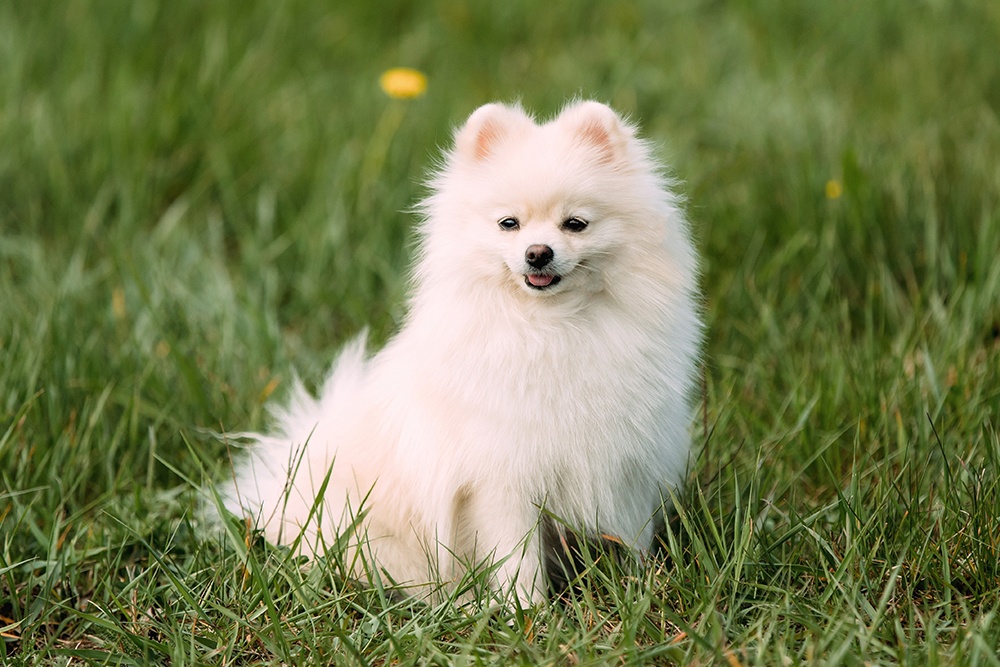
POMERANIAN
| Origin: | Poland |
| Size: | Small |
| Color: | Others |
| Type: | Purebred |
| Breed Group: | Spitz |
| Character: | Smartest |
| Temperament: | Friendly, Lively, Playful, Alert And Aware Of Changes In Their Environment, Barking At New Stimuli. |
| Height: | 7-12 inches (18-30cm) |
| Weight: | 3-7 pounds (1.4-3.2kg) |
| Life Span: | 12-16 years |
| Overview: | The Pomeranian (often known as a Pom) is a breed of dog of the Spitz type that is named for the Pomerania region in north-west Poland and north-east Germany in Central Europe. Classed as a toy dog breed because of its small size, the Pomeranian is descended from larger Spitz-type dogs, specifically the German Spitz. The breed has been made popular by a number of royal owners since the 18th century. Queen Victoria owned a particularly smallPomeranian and consequently, the smaller variety became universally popular. During Queen Victoria's lifetime alone, the sizeof the breed decreased by half. Overall, the Pomeranian is a sturdy, healthy dog. The most common health issues are luxatingpatella and tracheal collapse. More rarely, the breed can have Alopecia X, a skin condition colloquially known as "black skindisease". This is a genetic disease which causes the dog's skin to turn black and lose all or most of its hair. As of 2017, in terms of registration figures, since at least 1998, the breed has ranked among the top fifty most popular breeds in the United States, and the current fashion for small dogs has increased their popularity worldwide. |
| History: | The Pomeranian is considered to be descended from the German Spitz. The breed is thought to have acquired its name by association with the area known as Pomerania which is located in northern Poland and Germany along the Baltic Sea. Although not the origin of the breed, this area is credited with the breeding which led to the original Pomeranian type of dog. Proper documentation was lacking until the breed's introduction into the United Kingdom. "A man and a woman walking next to a wood with their white dog. The woman is dressed in a white 18th-century gown and a blackhat, and the man is dressed in a black suit with white stockings." Portrait of Mr and Mrs William Hallett by Thomas Gainsborough, 1785. The painting features a larger type of Pomeranian thanis now common. An early modern recorded reference to the Pomeranian breed is from 2 November 1764, in a diary entry in James Boswell'sBoswell on the Grand Tour: Germany and Switzerland. "The Frenchman had a Pomeranian dog named Pomer whom he was mighty fondof". The offspring of a Pomeranian and a wolf bred by an animal merchant from London is discussed in Thomas Pennant's ATour in Scotland from 1769. Two members of the British Royal Family influenced the evolution of the breed. In 1767, Queen Charlotte, Queen-consort ofKing George III of Great Britain, brought two Pomeranians to England. Named Phoebe and Mercury, the dogs were depicted in paintings by Sir Thomas Gainsborough. These paintings depicted a doglarger than the modern breed, reportedly weighing as much as 30-50 lb (14-23 kg), but showing modern traits such as the heavycoat, ears and a tail curled over the back. |
| Figure: |  |